
Call Now
+91 939-332-2500
Email
sales@rsarora.com
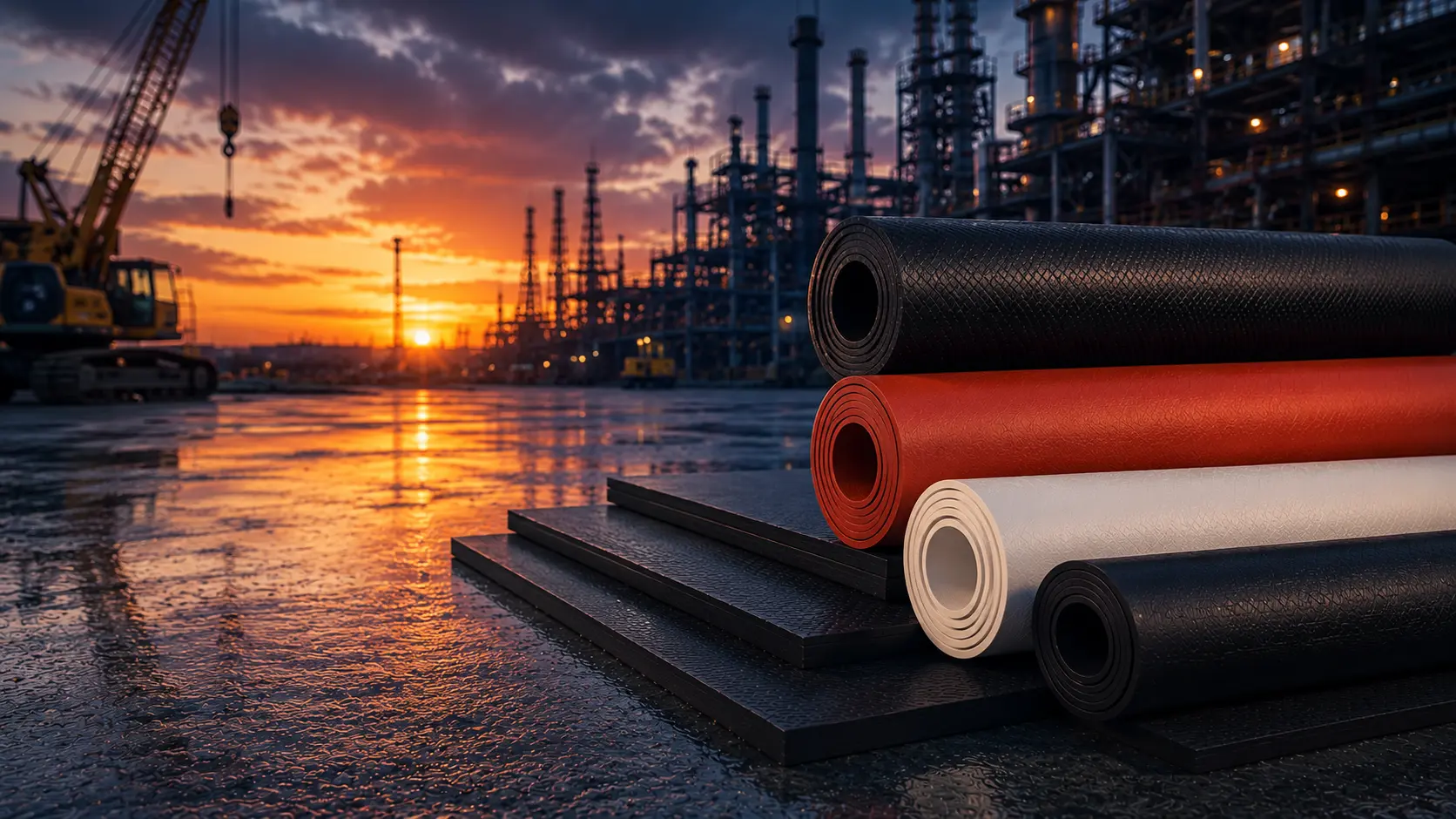
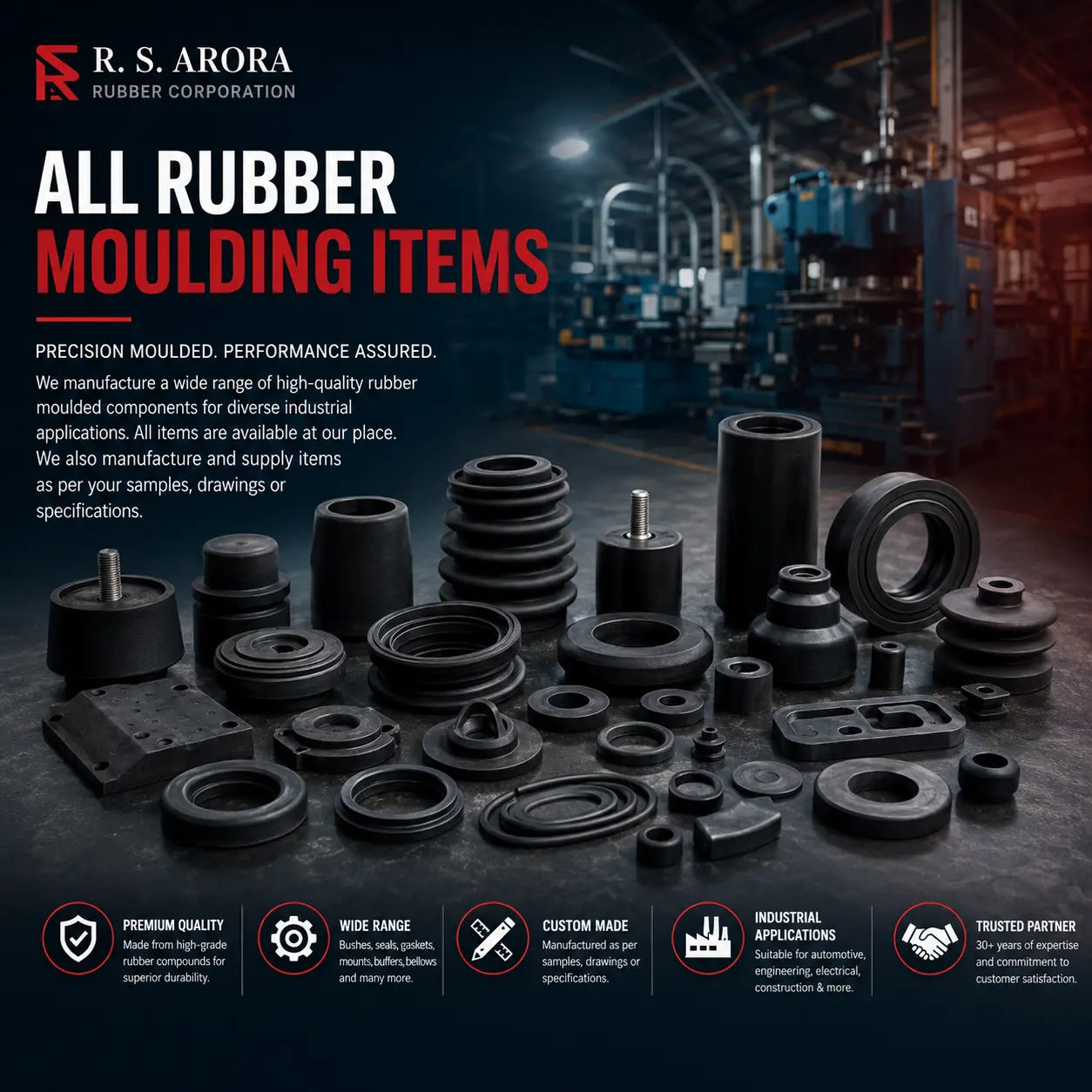
R. S. Arora manufactures and supplies application-specific rubber mouldings & beadings, profiles and industrial rubber components. With rubber manufacturing experience since 1987, the company supports requirements for machinery, equipment, industrial assemblies, sealing arrangements and replacement components. As Rubber Mouldings and Beadings Manufacturers in India, R. S. Arora focuses on the required dimensions, material, application and installation conditions before manufacturing.
Rubber mouldings are used where a component requires a defined shape, while rubber beadings and profiles are generally used for sealing, edge protection, cushioning and finishing. The appropriate solution depends on how the rubber component needs to fit and perform within the application.
Industrial rubber components are often designed around the equipment or assembly in which they are installed. A standard size may not always provide the required fit, shape or function.
R. S. Arora supports requirements for:
Drawings, samples, dimensions and application details can be used to understand the required component before manufacturing.
Rubber mouldings are shaped components manufactured according to a defined geometry. They can be used where a rubber part requires a particular form, thickness, profile or fit.
Custom rubber moulding is suitable when the required component does not match a standard shape or dimension. A technical drawing, sample or dimensional information can help define the required moulded rubber component.
Moulded rubber parts can be incorporated into machinery and industrial assemblies for functions such as sealing, cushioning, protection or fitting. The design and material should be selected according to the conditions in which the component will be used.
Replacement parts may need to match an existing component that has worn or become damaged. An original sample, drawing or accurate dimensions can help establish the required rubber moulding part.
Rubber beadings and profiles are generally continuous sections with a defined cross-sectional shape. They can be used around edges, grooves, frames and joining surfaces where rubber is required for sealing or protection.
Rubber beadings are used for applications involving sealing, edge protection, cushioning and finishing. Their profile, dimensions and material depend on the installation arrangement and operating environment.
Extruded rubber profiles are suitable where a continuous section with a consistent cross-section is required. Custom rubber profiles can be developed according to the required dimensions and installation arrangement.
Rubber sections and strips can be used where a continuous rubber element is required for sealing, protection or fitting. Width, thickness, length and material can vary according to the application.
Rubber mouldings and beadings can be used in applications where a component needs to fit, seal, protect, cushion or separate surfaces.
Common requirements include:
The component design and rubber compound should be considered according to the actual operating conditions.
Material selection is an important part of rubber component manufacturing. The suitable compound depends on factors such as temperature, environmental exposure, flexibility and the intended application.
EPDM can be considered for applications exposed to outdoor and environmental conditions where its characteristics are suitable for the requirement.
Neoprene is used for various industrial applications where a combination of flexibility and environmental resistance is required.
Silicone may be considered for applications where particular temperature or environmental characteristics are required.
Natural and synthetic rubber compounds can be selected for different industrial requirements based on the required physical properties and working conditions.
Manufacturing starts with understanding the component requirement and its intended use.
The required dimensions, application, quantity and installation arrangement are reviewed. A drawing or existing sample can provide useful information about the component.
The rubber material is considered according to the application, operating environment and required characteristics.
For moulded components, the required geometry is used to establish the moulding requirement. For beadings and extrusions, the cross-sectional design is considered for the intended installation.
The component is manufactured according to the approved design, dimensions and material requirements.
Finished components can be checked for dimensions, appearance and conformity with the specified requirements before supply.
A drawing or sample is particularly useful when a standard rubber component does not meet the required dimensions. Drawing-based manufacturing also helps establish the component geometry before production.
Useful information includes:
This information helps the manufacturer understand the component and determine the appropriate manufacturing approach.
Rubber beadings are used in different ways, so the right profile depends on where it will be fitted and what it needs to do. A beading used along an edge may have different requirements from one fitted between two surfaces.
When selecting a rubber beading, consider:
These details help in choosing a beading that fits properly and performs as required in the intended application.
Choosing the right rubber moulding or beading depends on how and where it will be used. Size is important, but other details also need to match the application.
Consider the following:
Providing these details helps in selecting a rubber component that fits the application and installation requirements.
| Requirement | Information to Provide |
|---|---|
| Component type | Moulding, beading, profile or rubber part |
| Dimensions | Length, width, thickness or cross-section |
| Drawing or sample | Drawing, CAD file or existing component |
| Material | Required rubber compound, if known |
| Application | Where and how the component will be used |
| Operating conditions | Temperature, movement and environmental exposure |
| Installation | Groove, channel, edge or assembly arrangement |
| Quantity | Required quantity or regular requirement |
Providing these details gives the manufacturer a clearer understanding of the requirement before production.
Replacement rubber components often need to match an existing part rather than simply meet a general product description.
The original component, drawing or dimensional information can help establish:
This approach is useful for machinery maintenance and replacement requirements where an existing rubber component needs to be reproduced.
R. S. Arora has been associated with industrial rubber manufacturing since 1987. Its experience in rubber product manufacturing supports requirements where component dimensions, material selection and application conditions need to be considered together.
Key considerations include:
R. S. Arora supports requirements for moulded rubber components, beadings, profiles and other industrial rubber parts based on application and component requirements.
Customers can provide a drawing, sample, dimensions, application details and quantity to help define the required component. For Rubber Moldings and Beadings Manufacturers in India, evaluating the complete requirement helps establish the appropriate material, profile or moulded design for the intended application.
Contact R. S. Arora Rubber Corporation today for tailored product specifications, dimensions, application advice, and dependable pan-India delivery.
Contact Our Team