
Call Now
+91 939-332-2500
Email
sales@rsarora.com
PVC Waterstops are specially formulated plasticized PVC profiles used in concrete and masonry construction of hydraulic structures. They act as watertight seals, protecting structures from hydrostatic pressure, water seepage and joint movement caused by temperature changes, settlement and structural displacement.
Black / White
25 Meters Roll Length
Any profile, colour and size can be manufactured as per project requirement.
PVC Waterstops are engineered as watertight seals in poured concrete structures and hydraulic systems. They prevent water seepage through construction, expansion and contraction joints while maintaining structural integrity.
These specially designed profiles accommodate joint movement arising from thermal expansion, contraction, foundation settlement and structural displacement, eliminating the risk of leakage and crack formation in concrete structures.
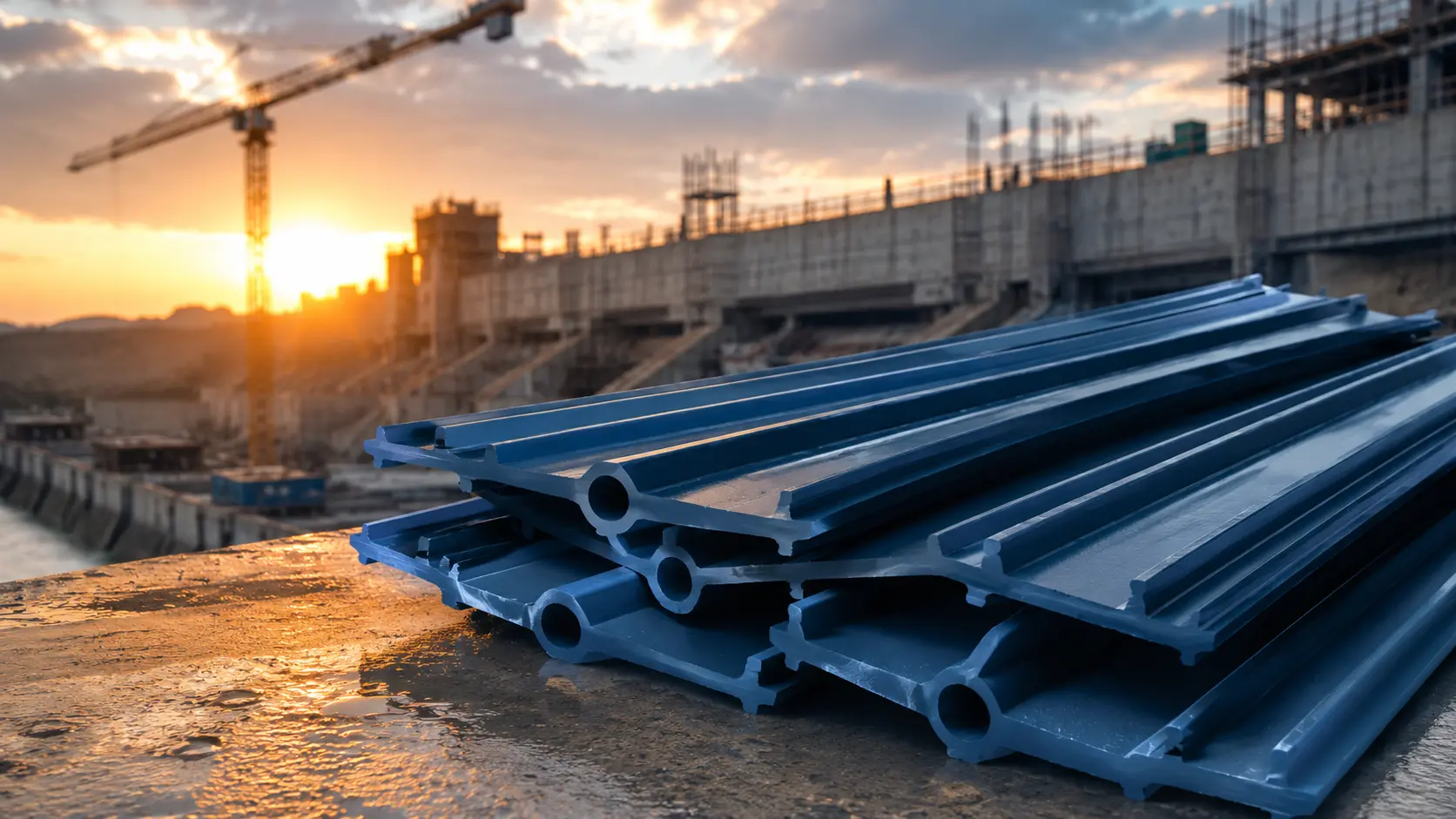
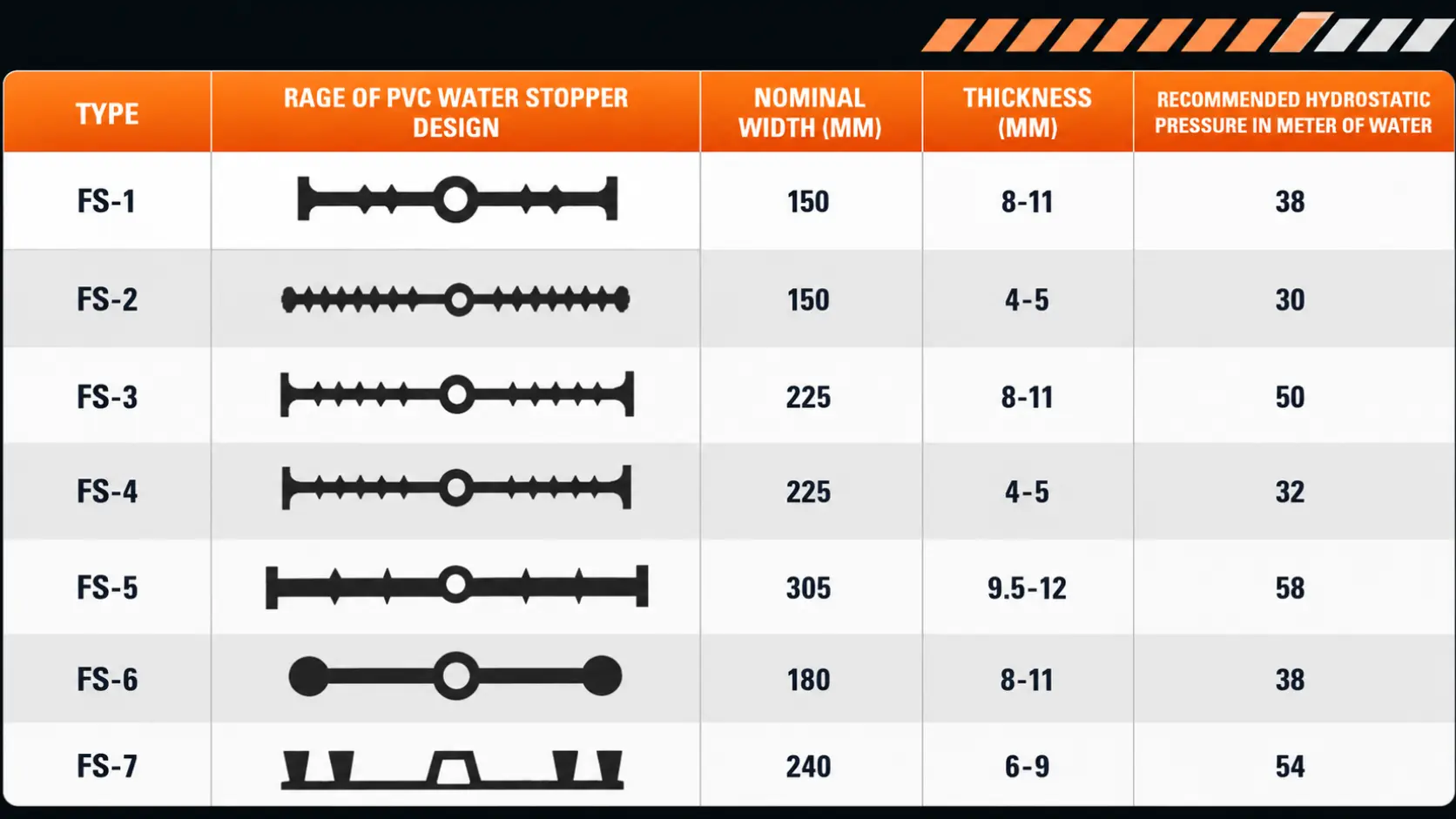
Selection of the appropriate PVC Waterstop depends upon hydrostatic pressure conditions, expected joint movement and the safe passage of seepage water within the structure.
Where substantial expansion and contraction of joints is anticipated, Dumb Bell Type PVC Waterstops should be used.
Where differential settlement is expected and superior anchorage in concrete is required, Serrated Type PVC Waterstops are recommended.
Overall width of the Waterstop should never exceed the thickness of the concrete section.
Distance from the concrete face to the Waterstop should not be less than half the width of the profile.
Waterstop width should be at least six times larger than the biggest aggregate used in concrete.
Proper concrete compaction around the Waterstop is essential for maximum sealing performance.
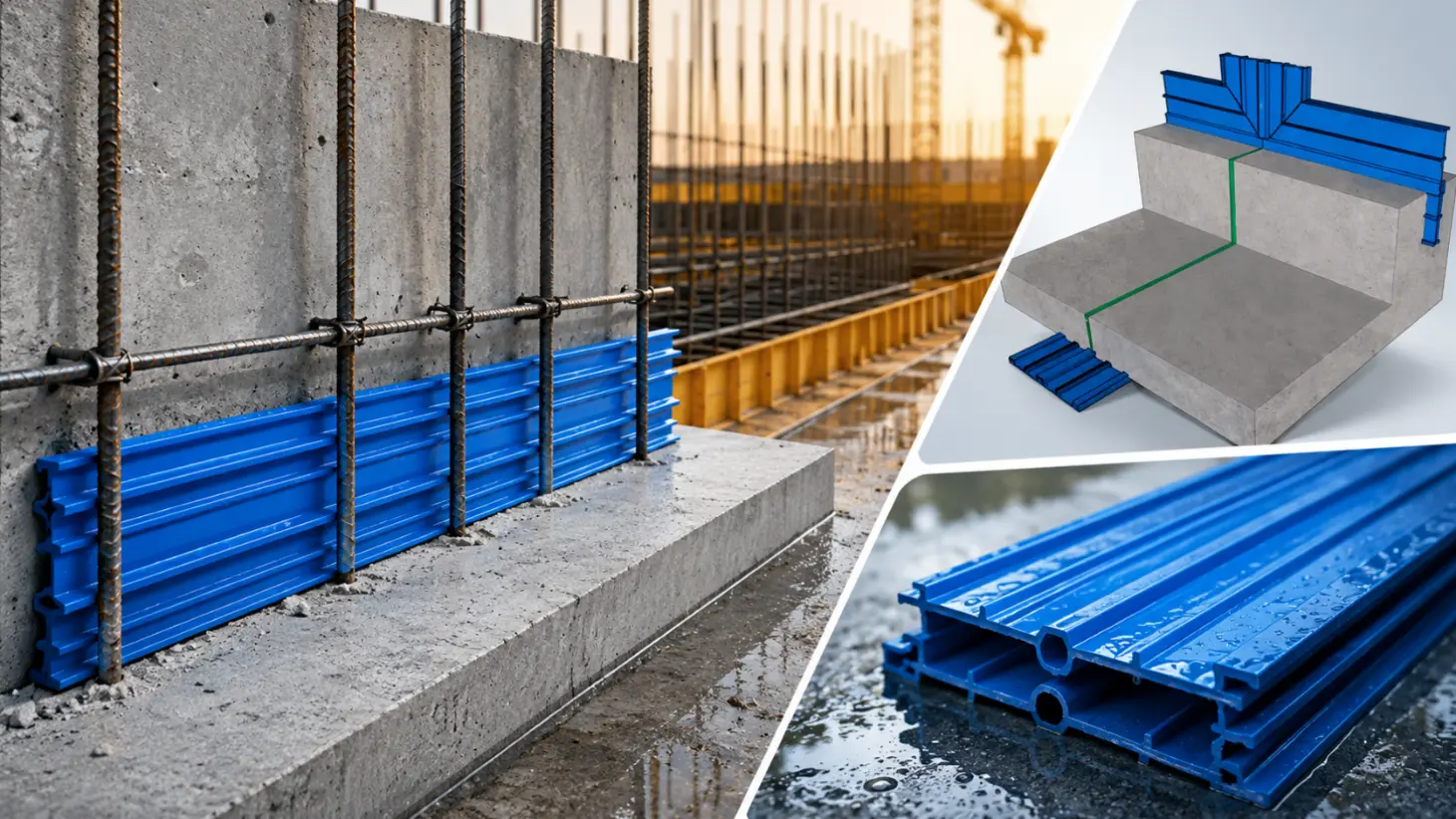
One half of the PVC Waterstop is embedded within the first concrete pour while the remaining half remains exposed. During the subsequent pour, the exposed section is embedded into fresh concrete, leaving the center bulb free to accommodate movement.
Proper positioning and alignment are critical to ensure long-term sealing performance and protection against water ingress.
Accurately position the PVC Waterstop along the planned construction or expansion joint.
Embed one half of the Waterstop into concrete while ensuring correct alignment throughout the pour.
Embed the remaining half while keeping the center bulb free for expansion and contraction movement.
Verify alignment, compaction and sealing performance before commissioning the structure.
PVC Waterstop joints can be fabricated on-site using simple equipment and heat fusion techniques. Proper welding ensures continuous watertight performance across long joint runs and complex layouts.
Provides strong and homogeneous joints without compromising flexibility.
Simple tools allow quick installation and joint preparation directly on site.
Properly welded joints provide excellent resistance against seepage and leakage.
PVC Waterstops are extensively used in hydraulic, infrastructure, industrial and commercial construction projects wherever reliable water sealing and protection against seepage are required.
Prevents seepage through construction and expansion joints.
Excellent ageing properties and resistance to harsh environments.
Resists acids, alkalis, salts and industrial chemicals.
Accommodates expansion, contraction and settlement movements.
Download our latest catalogue to explore PVC Water Stop profiles, technical specifications, installation methods, dimensions, standard sizes and customized solutions for dams, tunnels, water tanks, basements, canals and hydraulic structures.
Download Catalogue PDF